Label
Deutsche Grammophon
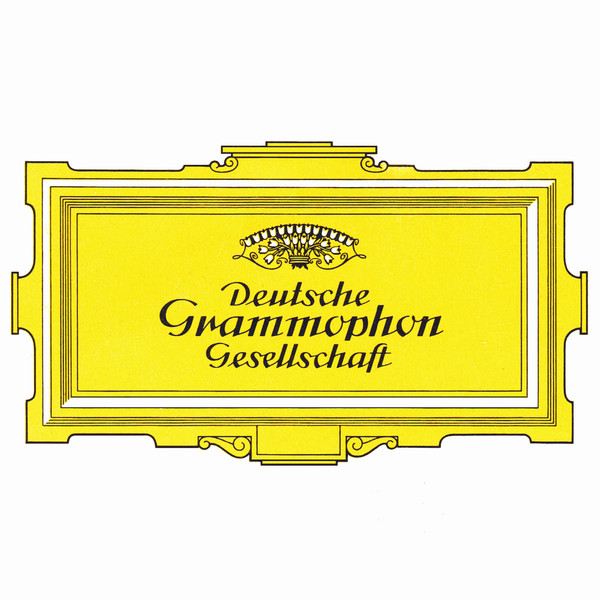
German label. Label Code: LC 0173 / LC 09173. Deutsche Grammophon, or Deutsche Grammophon Gesellschaft, has been the main classical music label of German record company Deutsche Grammophon GmbH since 1949. Prior to that date, the label Grammophon was used until 1943, in conjunction with the Nipper dog. Between 1942-1948 the Siemens Spezial label was used. Note: The branding "Deutsche Grammophon Gesellschaft" was used until 1970. These releases also belong here as it is one and the same label. For company credits which use the "Deutsche Grammophon Gesellschaft" / "Deutsche Grammophon" trademark, use the Deutsche Grammophon Gesellschaft profile. In 1949, the tulip crown is introduced, after the trademark rights to HMV/Nipper had been sold to EMI (Electrola). In 1957, the "cartouche", bordered by a garland of tulips, is introduced. Series associated with Deutsche Grammophon: Deutsche Grammophon Debut: This series presents upcoming, young, performing talents. AvantGarde (2): Series devoted to (then) contemporary music, released in late 1960s & early 1970s. Four 6-LP box-set collections also issued. Deutsche Grammophon Resonance: In this series, older, often very good, recordings are being reissued at a cheap price. Collectors Edition (2): Series of box-set compilations. Festival Of Hits: Budget compilation series initially made for the Canadian market, with a distinctive visual theme. Releases from the 1950's and 1960's, and also from 2004 onwards, often come in different versions. Therefore it's recommended to mention the graphical layout of the cover or centre labels. Otherwise the following information should be added to the Release Notes on submissions: 1. Branding: Deutsche Grammophon Gesellschaft or just Deutsche Grammophon (both for cover and labels, may differ). 2. Centre-labels border: tulip or straight border (the latter replaced the former in 1969). 3. Centre-labels colour when there's a tulip border (darker or brighter yellow - difficult as you have to compare or know the two). Issues/pressings with dark yellow background are even older, see label images for an example of a darker and a brighter centrelabel with tulip borders (darker is a 1956 print, the brighter a 1959 print). 4. If Stereo is on a red background on the front cover or on a red sticker ("Stereo Compatible" - stereo reissues of 17 / 18 / 19 mono series releases). 5. Gatefold cover with stitched spine (older issue/pressing). 6. For those with stitched spine: mention if it's an illustrated or generic front cover (oldest releases have a generic cover design). 7. Centre label features "Alle Hersteller- ..." (until 1966) or "Made in Germany" (since 1967). 8. Rim text on labels of German LPs "Urheber- Und ..." was replaced by "Alle Urheber- Und ..." late 1976 / early 1977. Price codes, catalogue number series and format relations: · LP (price: 15 DM) 16 xxx - 10" LP mono (early/mid 1950's - beginning 1960's) · LPE (price: 15 DM) 17 xxx - 10" LP mono (early/mid 1950's - beginning 1960's) · LPM (price: 25 DM) 18 xxx - 12" LP mono (early/mid 1950's - mid 1960's) · LPEM (price: 21 DM) 19 xxx - 12" LP mono (mid 1950's - mid 1960's) · SLP (price: 15 DM) 133 xxx - 10" LP stereo (1960's) [see LPEM 16 mono above] · SLP (price: 15 DM) 135 xxx - 10" LP stereo (1960's) [see LPEM 17 mono above] · SLPM (price: 25 DM) 138 xxx - 12" LP stereo (1960's) [see LPM 18 mono above] · SLPEM (price: 21 DM) 136 xxx - 12" LP stereo (1960's) [see LPEM 19 mono above] · EPL (price: 8 DM) 30 xxx 7", 45 rpm mono · NL 32 (price: 5 DM) xxx 7" 45 rpm mono · SNL (price: 5 DM) 120 xxx 7" 45 rpm stereo · SEPL (price: 8 DM) 121xxx 7" 45 rpm stereo · 1x xxx - mono · 101 xxx - Stereo equipment test records · 004 xxx - Promotional releases, mono (samplers, promo's, ...) (mid '60's, used both for DG and for Archiv Produktion) · 104 xxx - Promotional releases, stereo (samplers, promo's, ...) (mid '60's, used both for DG and for Archiv Produktion) · 0100 xxx - Third party pressings through Belgian Phonogram subsidiary (S.A. Phonogram N.V.) · 25xx xxx - stereo only (from ca.1970 to early 1980's CD era) · 27xx xxx - multiple record set, often in box with booklet & other documentation; individual LPs also have distinct (sequential) catalog numbers. The 7-digit numerical catalogue numbers were introduced in April 1970. Any item with such a catalogue number has been released after that date. Note: Inner poly lined dust sleeves for some Deutsche Grammophon pressings and reissues usually show a manufacturing date. For example N #/82 or N#/80 on bottom right corner, thus referring to the year 1982 or 1980 that the inner sleeve was made. This is not a completely safe way to determine the exact year for releases, it however will give a very close indication of the release year, indicating the record was pressed either the indicated year or one year later. For a detailed essay about the meaning of DG-codes on German vinyl releases, see this forum entry. Use Deutsche Grammophon GmbH (1938-present) where it appears as such, or a variation of that name (for instance Deutsche Grammophon Gesellschaft mbH.) Use Deutsche Grammophon Hamburg where it appears as Deutsche Grammophon, Hamburg or Deutsche Grammophon Gesellschaft, Hamburg, or a variation. Use Deutsche Grammophon-Aktiengesellschaft (1900-1937), where it appears as such, or a variation of that name (for instance Deutsche Grammophon AG.) Use Deutsche Grammophon G.M.B.H. Hannover where it appears as such. Use Deutsche Grammophon Gesellschaft where the Deutsche Grammophon or Deutsche Grammophon Gesellschaft trademark is used for a company credit. For lacquer cut & pressing roles, there is Deutsche Grammophon Gesellschaft Pressing Plant (1945-1972), this name will not appear on any record, but can be derived from the runouts.
Sublabels
Releases (74,164 total)

Schlager-Erinnerungen Mit Peter Alexander
Peter Alexander1969
Swing Out '69
Kai Warner1969
Kitsch / Give Me A Sign
Barry Ryan1970
Acid Age
Acid (4)1978
Dunkelgraue Lieder
Ludwig Hirsch1978
Die Barke Einsamkeit (Adios Muchachos Adios)
Freddy*1970
Ein Abend Mit Roy Black
Roy Black1969
Move On Up
Curtis Mayfield1971
A Little More Line
Labi Siffre1970
Foxy Lady / Manic Depression
The Jimi Hendrix Experience1967
Just Believe
Bobby Solo1971
River Deep, Mountain High / White Houses
Eric Burdon & The Animals1968
Maria Bill
Maria Bill1983
Cairo Hotel
The Paupers1968
Heurige Und Gestrige Lieder - Geschichten Aus Dem Wienerwald
Heller* Und Qualtinger*1986
Schlagerrunde Folge 8
Orchester Jo Plée1970
Hungarian Fantasy For Piano And Orchestra; Hungarian Rhapsody No. 5 In E Minor; Hungarian Rhapsody No. 4 In E Flat Major; Hungarian Dances Nos. 5,6,3,1
Liszt* / Brahms* - Herbert Von Karajan, Berlin Philharmonic Orchestra*, Shura Cherkassky0
Accordion Up To Date 2
Fred Hector And His Accordion-Orchestra*1970
Die Sonnenbrille / Via Lila Belle (Regenbogenmädchen)
Rosemarie1970
Get Down / We're A Winner
Curtis Mayfield1971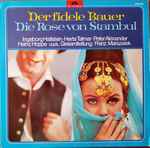
Der Fidele Bauer / Die Rose Von Stambul
Ingeborg Hallstein, Herta Talmar, Peter Alexander, Heinz Hoppe U.V.A., Gesamtleitung: Franz Marszalek1967Der Fidele Bauer / Die Rose Von Stambul
Ingeborg Hallstein, Herta Talmar, Peter Alexander, Heinz Hoppe U.V.A., Gesamtleitung: Franz Marszalek1967
Dunkelgraue Lieder
Ludwig Hirsch1978
Musik Aus Spanien
Joaquin Turina* / Manuel de Falla1967
Heidi, Wart', Wir Jodeln Zerscht (Die 20 Erfolgreichsten Lieder Der D'Kasermandl)
Klaus Und Ferdl - D'Kasermandln1976
Hifi-Stereo-Festival 2
Various1969
Alt Und Neu Hamburg
Orchester Hans Freese, Addi Münster, Maria Kloth, Richard Germer, Heidi Mahler, Carl Bay0
Fantasy In C Major / Variations And Fugue On A Theme By Handel
Robert Schumann - J. Brahms*, Wilhelm Kempff2010
Die Blumen Sind Für Sie Herr Polizist
Heidi Franke1968
Wenn Du Mal Einsam Bist (Rowbottom Square) / Nur Die Liebe Ist Gut
Chris Robert*1968